Playing the Tune vs. BEING the Tune




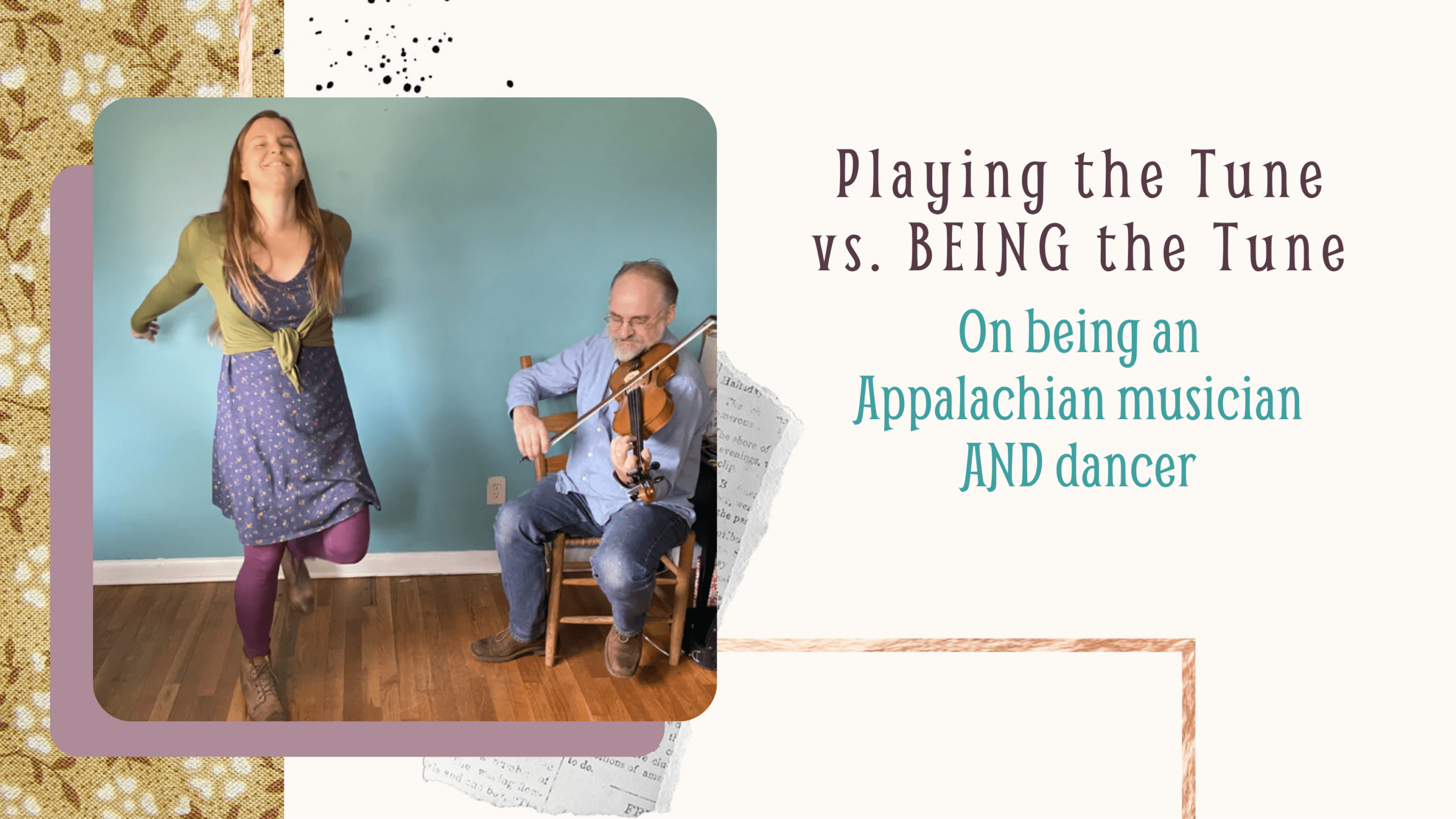
I’ve played music since I can remember. Even before I started playing instruments, I was singing with my family, and in church. But the night I first saw improvised Appalachian flatfoot dancing, everything changed
Now, from the time I was small, I burned to understand music, to be able to perform, to know all of its secrets. I sought out every opportunity to learn and play, from piano lessons to playing guitar with a woman at church to picking up the saxophone. My parents were very supportive of my passions.
So by the time I was a teenager, I was pretty comfortable playing music. Still learning tons, but confident in my identity as “musician.”
The Moment That Changed Everything
But something transformative happened at a festival one weekend, when I was 17. I saw two dancers hop up onstage while a string band was playing, and they absolutely BURNED IT DOWN with their moves, their grace, and their joy.
They were part of the band, and they traded rhythms with each other AND the other musicians, seamlessly.
And the part that blew my mind is that they were clearly NOT doing choreography, but rather stringing together steps without even thinking about it — making it look as easy and natural as taking a breath.
A new fire was lit inside me that day. I didn’t just want to play music anymore. I wanted that.
(I later came to know that the two women I saw were Eileen Carson Schatz and Amy Fenton-Shine — and by miraculous kismet, Eileen would invite me to join her dance group just five years later!)
My Appalachian Flatfooting Journey
My dance journey took a lot of twists and turns. I was in college and didn’t know where to find anyone who was doing that kind of folksy flatfooting and clogging. Kentucky has always had active “white shoe” (aka contemporary clogging) groups, but that didn’t appeal to me in the same way, even though I tried it for a while. (If you’re wondering how clogging, flatfooting, and buck dancing differ, I’ve written a whole post on that. READ IT HERE. )
I did lots of modern dance, took some rhythm tap, and joined every multicultural dance class our university had — salsa, merengue, African styles, swing — you name it.
But one fateful day when I was recording my first album near Washington, D.C., my producer offered me a place to stay, and his girlfriend was…the woman I’d seen dancing at the festival!
She was looking for someone to play music and dance in her ensemble, and even though I only knew the two steps I’d grown up with (the clogging basic, aka “double step rock step,” where I was from) she basically hired me on the spot.
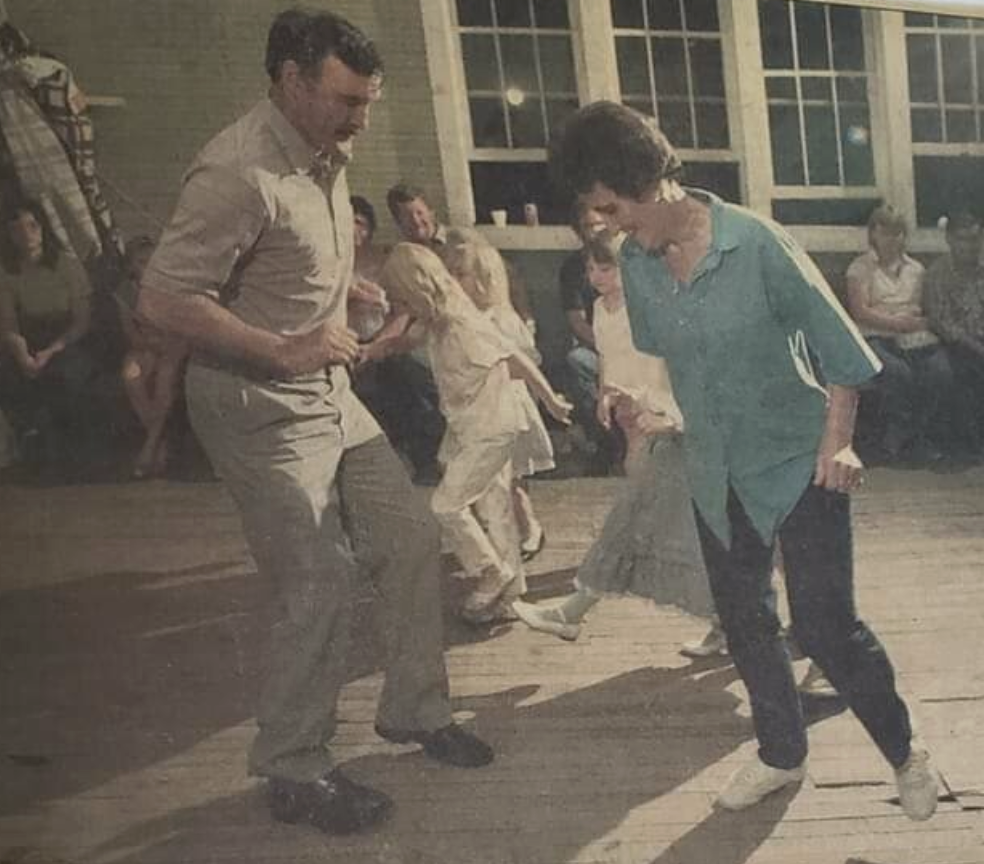
So, I learned steps. SO many steps. I learned choreography — many pieces from her extensive repertoire. I danced with other dancers, many of whom were much better and more experienced than me. (Which is a good but humbling way to make fast progress!)
And on some of our numbers, I’d play guitar with the band, or sing.
The Problem With Knowing Steps But Not How to Improvise
But when we’d go to festival after-parties or local events, I encountered a real problem. The band would start up, and tons of dancers — my castmates included — would flock to the floor and start flatfooting up a storm.
But I didn’t know how to do that. I knew steps. I knew routines.
The idea of getting up and putting it all together, in front of other dancers who looked SO confident — that was terrifying. I was so scared I’d look like a fool.
Eventually, Eileen literally started dragging me onto the dance floor.
After a few months, I got to where I could do it, a little. After a few years, I felt pretty comfortable — but I was always scared. Especially in situations where there were many other dancers, I was afraid of looking like a poser.
Over the years, it got easier and easier, but there was a lot of blood, sweat, and tears along the way. I got to where I could dance onstage and improvise along to a band with ease and confidence — just like the two women I’d seen at that festival, who inspired me to learn this style in the first place.
The Flatfooting Formula: How I Finally Cracked the Code
But it wasn’t until the pandemic hit and I turned to teaching Appalachian flatfoot dance online that I realized that— gradually, over the years and without even knowing it consciously — I’d developed a formula that helped me improvise.
When I took some time to reflect on my method, I realized I was doing a few things consistently:
- I was always starting with a basic step to get warmed up and settle into the groove.
- Then I was shifting to a different step for a few counts.
- Then I’d shift back to the basic/rest step while I thought of what to do next.
Rinse. Repeat.
There are more nuances than that. For example, I learned over time which steps work well with which tunes, what moves pair perfectly with the end of a fiddle phrase, and how to relax and project the joy I feel inside while I’m dancing. But the basic pattern stays the same.
If you’re a traditional musician, you already know the tune structure. It’s just AABB. You’re not learning a new language — you’re learning to play the rhythm with your feet instead of your fingers. (And yes, I know that crooked tunes or tunes with C parts are exceptions, but the formula can still be applied!)
You Don’t Need Years of Trial and Error to Start Flatfooting
My journey from “just a musician” to “confident flatfoot dancer and improviser” took many years, a lot of trial and error, and quite a bit of discomfort and feeling totally awkward. But the way I teach the Flatfooting Formula allows you to learn to improvise from the very first steps you learn.
No joke — you can dance all night and look great with as few as four steps. Everything else is just gravy. (Or maybe biscuits?)
Ready to Start Your Appalachian Flatfooting Journey?
If you’d like to put this theory into practice, I invite you to check out my free Flatfooting Quick Start video and learn 4 essential steps so you can start dancing AND improvising today.
GET THE FREE APPALACHIAN FLATFOOTING QUICK START VIDEO
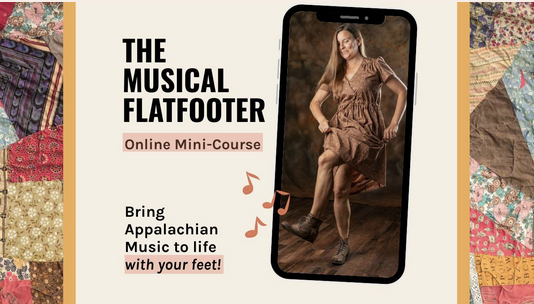
And if you, like me, are a musician who longs to make “music with your feet,” you are cordially invited to join the upcoming live round of The Musical Flatfooter — where we go deep into the who, why, what, and most importantly the how of adding improvisatory Appalachian flatfoot dance into your life, your credentials, and even your stage show.
And if you’re ready to go deeper…
JOIN THE MUSICAL FLATFOOTER


• Enjoy original songs, banjo tunes, and mountain ballad downloads from the hills of East Kentucky
• Learn the basics of mountain percussive dance in my free instructional video “3 Essential Steps for Appalachian Flatfooting & Clogging”
• Snag our video guide to making your own herbal tinctures along with homey recipes from our family!
• Stay in touch about all things Appalachia with my fun weekly email, like a front-porch visit in your inbox!
Get a hearty helping of Appalachian Goodness with your free Mountain Mama Digital Care Package!

Free Gift
Website by Tracy Raftl Design
© 2023 Carla Gover
Menu

Follow me
Carla is currently based in Lexington, KY, ancestral lands of the Adena, Hopewell, S’atsoyaha (Yuchi), Shawandasse Tula (Shawanwaki/Shawnee), ᏣᎳᎫᏪᏘᏱ Tsalaguwetiyi (Cherokee, East), and Wazhazhe Maⁿzhaⁿ (Osage) nations.
Online Press Kit



A hearty helping of Appalachian goodness with lots of tools to help you stay happy and sane, including Kentucky songs and tunes, a Flatfooting & Clogging Video Class, our guide to making your own herbal tinctures, a creativity handbook, mountain recipes, and more!
Get your free Mountain Mama Digital Care Package, sent straight to your inbox